3D printing technology
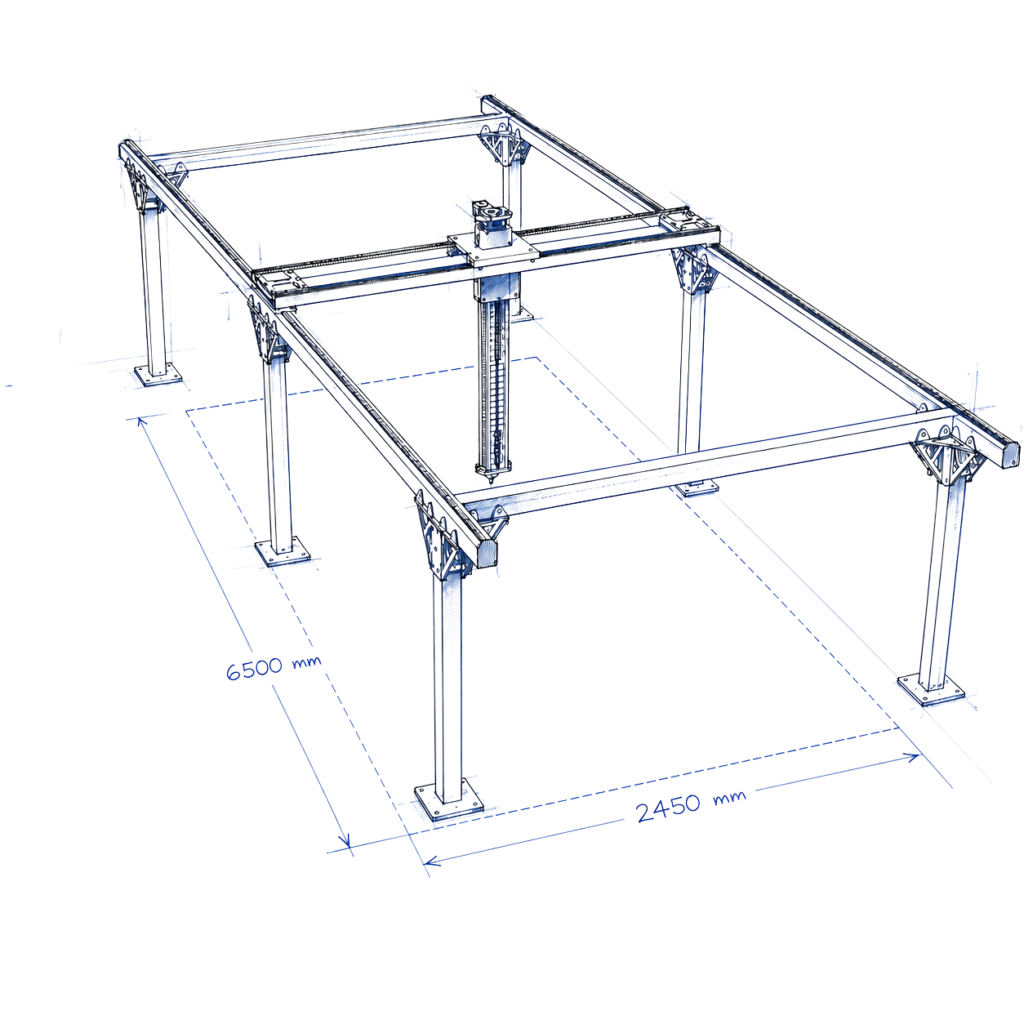
Our 3D concrete printer turns a digital model into a physical concrete object layer by layer. The large work area makes it possible to produce furniture, planting solutions and design elements as well as larger public space and architectural solutions.
The printer's work area is 7000 x 3000 mm. The permitted print height varies along the length of the work area from approximately 300-1000 mm, and the exact placement is checked against the model.
3D printing technology
Material, machine and model work together
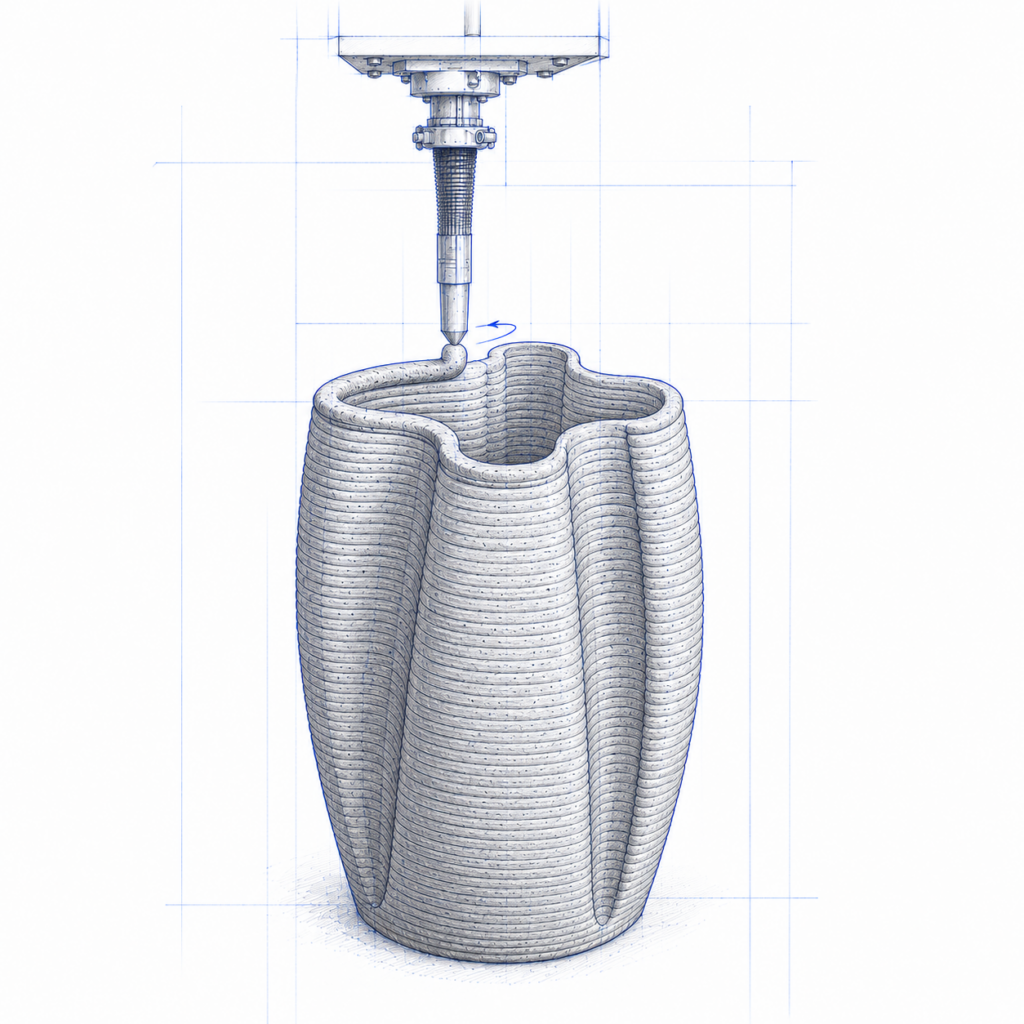
The dry mix is mixed with a controlled amount of water and pumped to the printer's nozzle. The printer moves along three axes and lays down the material according to a pre-calculated toolpath. The fresh layer must be pumpable and workable, yet stable enough to carry the following layers.
The printer does not cut the shape out of solid material. It places material only where the toolpath specifies.
This is why a 3D model is not yet a production file. Before printing, the print orientation, layer height, bead width, travel path, start and end points and, where necessary, the internal structure and division into separate parts are determined.
Four steps from brief to finished product
Every project follows the same basic logic, but the extent of checks and tests depends on the object's function and risk.
We define the function, dimensions, quantity, installation site and properties the object must have.
We create or check the 3D model and assess the toolpath, slopes, wall structure, division into parts, lifting and transport.
We prepare the toolpath and process parameters. For a new material, geometry or demanding use, we produce a trial piece as needed.
The object is printed, kept in agreed conditions, finished and checked against the characteristics specified in the order.
Printer and standard print process reference data
The mix is chosen according to shape and place of use
Print Betoon uses pumpable cement-based dry mixes on a project-by-project basis, including Weber ESL and Weber 3D 145-2, a mortar developed for 3D printing. The manufacturer's data describe the properties of the mix in its intended use; the properties of the finished printed object also depend on the print direction, interlayer bond, geometry, mixing and curing.